


Industries we serve, and how the work changes for each one
Industries we serve range from emergency plumbers to online shops, and each one wins customers in its own way. We keep the parts that work everywhere, fast pages, clean schema and tracking in six AI assistants, and rebuild the rest around how your customers actually choose.
- Led by Muhammad Younus
- Building websites since 2019
- Top Rated Plus on Upwork
- Websites from £1,495
Written by Muhammad Younus, founder of Renozer. Last updated 21 October 2026. Editorial policy.
What customers check first, by sectorSame goal, different journeys
- Plumber: who can come out todaySpeed
- Solicitor: fixed fee for probatePrice
- Dentist: registered, rated and nearbyTrust
- Café: the menu and allergensDetail
- Gym: class times this weekTiming
- Online shop: delivery and returnsRisk
Which industries we serve, and why it matters
A short answer before you pick your sector below.
We build websites and run SEO and AI search optimisation for nine kinds of business: trades, dental and medical clinics, solicitors, accountants, estate and letting agents, restaurants and cafés, barbers and salons, gyms, and online shops. Each sector gets pages, proof and rules that fit the way its customers decide.
A homeowner with water coming through the ceiling makes a decision in minutes. Someone choosing a probate solicitor might read for a week. A diner wants the menu, a gym member wants the timetable, and a shopper wants to know how returns work. One website template cannot serve all of those people well, so the structure changes even when the underlying craft stays the same. If your business is not listed, the same thinking applies, and the free AI visibility audit is the quickest way to see what your sector needs.
- Sectors
- Nine listed, plus most local service businesses
- Same everywhere
- Fast pages, schema, tracking in six AI assistants
- Different by sector
- Page types, proof, rules and integrations
- Websites from
- £1,495, see pricing
- Led by
- Muhammad Younus
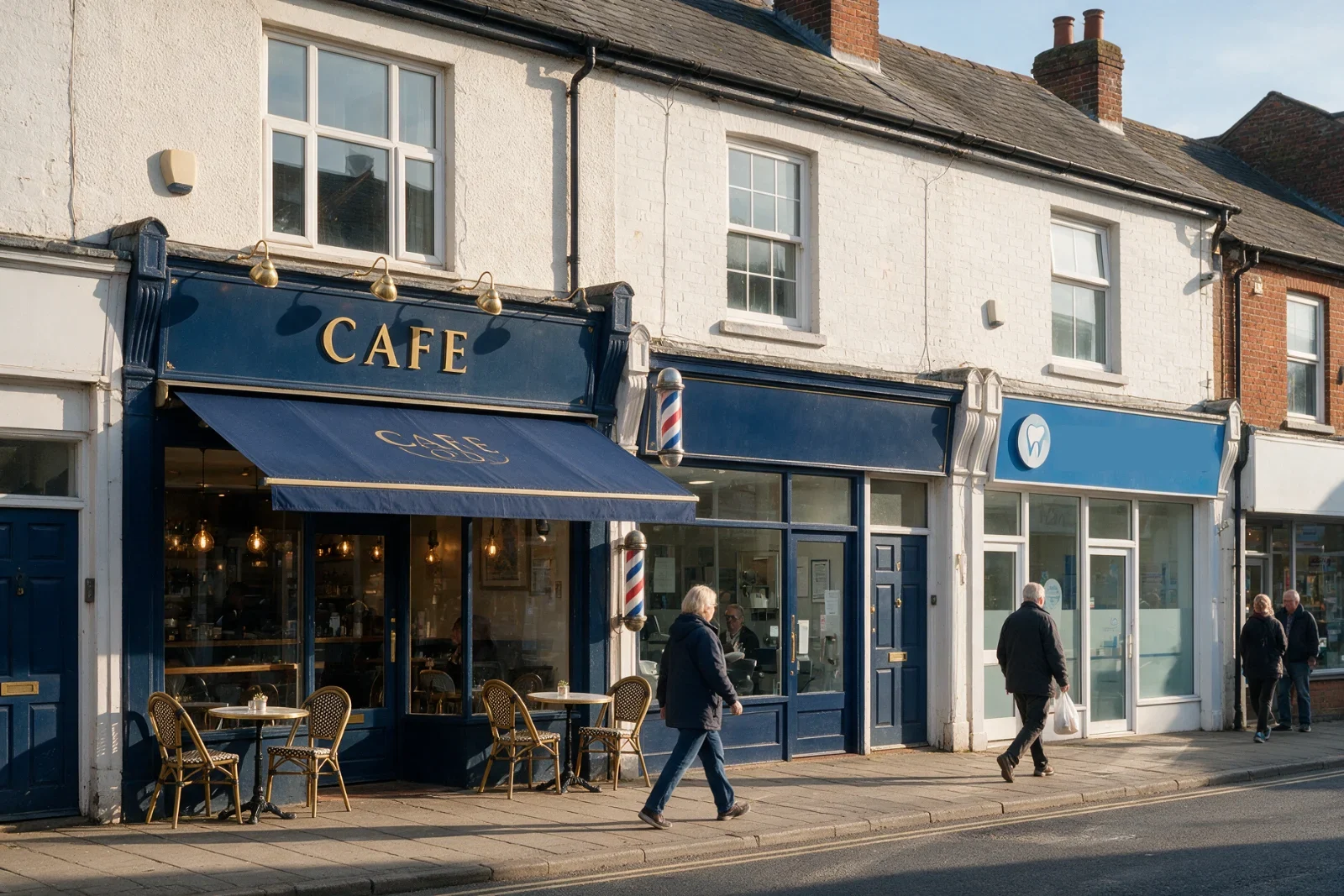
Choose your sector
Each page explains what your website needs, what customers search for and what the work costs.
How the work changes from one industry to the next
The same craft, aimed at very different decisions.
| Sector | How customers choose | The page that matters most | What the site must show |
|---|---|---|---|
| Trades | Fast, often urgent, from the Map Pack | Service and area pages with a call button | Gas Safe or electrical scheme details where held |
| Dentists and clinics | Trust first, then price and availability | Treatment pages with fees | CQC rating and clinician registration |
| Solicitors | Expertise and cost, researched carefully | Practice-area and price pages | SRA digital badge and price information |
| Accountants | Fit, fees and the software they use | Service pages with fixed fees | Professional body membership where held |
| Estate and letting agents | Local knowledge and valuation trust | Area guides and a valuation page | Redress scheme and client money protection |
| Restaurants and cafés | Menu, mood and a free table | A text menu with booking | Allergen information |
| Barbers and salons | Photos, prices and the next free slot | Service menu with online booking | Real work and real prices |
| Gyms and fitness | Classes, price and a trial | Timetable and membership pages | Clear membership terms |
| Ecommerce | Product detail, delivery and returns | Category and product pages | Returns and cancellation information |
Regulatory notes are a starting point, not legal advice. Check current guidance with your regulator before launch.
What stays the same in every sector
The groundwork no business should go without.
Some things do not change with the industry. Every site we build loads quickly on a phone, puts the answer to the customer's question near the top of the page, and describes the business in structured data that search engines and AI tools can read without guessing. Every site also has your Google Business Profile set up properly, because the local results decide where most service businesses get their first call.
Ownership is the same too. Your domain, hosting, website and accounts sit in your business name, and you can take them elsewhere at any time. Where your current site still ranks for useful searches, a redesign can keep those positions while the design moves on.
- Pages that load quickly on mobile data
- Answer-first copy written by a person
- LocalBusiness and service schema for your sector
- Google Business Profile set up and linked
- Questions tracked in Google and six AI assistants
- Everything in your name, nothing locked in

Why AI assistants answer differently for each industry
Six assistants, nine sectors, very different shortlists.
When someone asks ChatGPT, Gemini or Google's AI Overview for a dentist, the answer leans on registration details, reviews and clear treatment information. Ask for a café and the same tools look for menus, opening hours and photos. The signals change with the sector, so the work to get named changes with it.
That is why each industry page lists its own example questions. We agree a set of real questions for your business and check every month whether each assistant mentions you, cites your site or leaves you out, the same tracking that runs inside answer engine optimisation.
| Customer question | AI Overview | ChatGPT | Gemini | Perplexity | Claude | Copilot |
|---|---|---|---|---|---|---|
| emergency plumber open now in Leigh | Cited | Mentioned | Not yet | Cited | Not yet | Not yet |
| family dentist taking new patients in Sale | Not yet | Mentioned | Mentioned | Cited | Not yet | Not yet |
| fixed fee probate solicitor in Altrincham | Mentioned | Not yet | Cited | Cited | Mentioned | Not yet |
| brunch café with vegan options in Ramsbottom | Cited | Mentioned | Mentioned | Not yet | Not yet | Not yet |
| barber open on Sunday in Stretford | Not yet | Not yet | Mentioned | Cited | Not yet | Not yet |
| handmade candle shop with next day UK delivery | Mentioned | Cited | Not yet | Not yet | Not yet | Not yet |

Why generic marketing lets specialist businesses down
What owners in every sector tell us went wrong before.
A structure planned around how your own customers decide.
Real photos of your team, premises and work wherever possible.
Pages that answer the questions your customers ask in your sector.
Badges, ratings and price information placed where customers expect them.
Integrations checked before quoting, and built properly, or custom work where needed.
How we start work in a new sector
Five steps, the same order every time.
Understanding comes before design. We spend the first week learning how your customers choose and which questions they ask, then plan the pages around that. The wider process is set out on how it works.
- Learn the decision
A call about how customers find you, what they ask first and why they choose you or a competitor.
- Map the questions
Searches and AI questions for your sector and your towns, checked in Google and six assistants.
- Plan the pages
Service, proof and sector pages agreed before design starts, with the rules your sector must follow.
- Build and connect
Design, content and integrations with your booking, CRM or shop system, tested on staging.
- Track and improve
Monthly reporting on rankings, AI mentions and enquiries, with the next priorities in plain English.

Website and SEO prices for every industry
One price list for every sector. What changes is the plan, not the rate.
Wix or Squarespace. WordPress from £1,995 and Shopify from £2,495.
- Page plan shaped by your sector
- Copy that answers customers first
- Sector schema and profile set-up
- Your booking or enquiry tool linked in
- A recorded tour of your editor
Plus £1,495 set-up. A new website, then monthly SEO and AI visibility work.
- A sector-ready website first
- Two pages a month on your customers' questions
- Profile updates that suit your sector
- A monthly note on AI mentions and calls
Prices exclude VAT. Custom builds start from £3,995. Compare every package.
Questions about industries we work with
See also our FAQ page.
Do you work with businesses outside these nine sectors?
Is each industry page just a template with the name changed?
Which website platform suits my type of business?
Do you handle the rules for regulated sectors?
How much does a website cost for my industry?
Can you connect the booking system or CRM I already use?
Do you only work with businesses in Manchester?
See how your sector looks to AI assistants
A free check of your website, Google profile and six AI assistants, with sector-specific priorities, in two working days.