
Who owns a website?
And do you actually own yours?
Most people never ask who owns their website until the day they try to leave. Then they find out the domain is registered to their old designer, the hosting account is in an agency's name, and the site itself lived on a platform that keeps it only while the invoices clear.
If any of that sounds familiar, or you just don't know the answers, this page is for you. Here's the short version, then the details, then a checklist you can take straight to whoever built your site.
Who owns a website?
A website is really four separate things, and each can be owned or rented independently: the domain name, the hosting account, the code and design files, and the content. You own a website only when all four are in your name and under your control. In a lot of small-business setups they aren't, which is why cancelling a web designer or a platform can mean losing the whole site, the rankings, and the address people already know.
A website is four things, and you can own or rent each one
Ownership isn't one yes-or-no question. It's four. Here's each layer, who should hold it, and where it quietly goes wrong.
Domain name
Your web address, the thing people type.
Hosting account
The server your site runs on.
Code & design files
The actual site: templates, layout, build.
Content
Your words, images, and pages.
The pattern is simple once you see it. Your content is almost always yours. The other three, the ones that actually keep the site online and ranking, are the ones a provider can hold.
The two-question test
You don't need a lawyer to find out where you stand. Ask whoever manages your site two questions and listen closely to the answers.
Whose name is on the accounts?
Not "who set them up," not "who manages them," whose legal name and payment method are on the domain and hosting accounts. If the honest answer is the designer or agency, you're renting.
What would you keep if you stopped paying?
The good answer is "everything: the domain, the files, the live site, all of it moves with you." The common answer is "the site would come down and the domain would stay with us." That gap is the whole issue.
How most web design quietly keeps your website
None of this is usually a scam. It's just how several common models are built, and the ownership catch is rarely spelled out.
The subscription platform
You build on a hosted builder and pay monthly. It's easy and it looks fine, but the site exists only while you pay, you can't take the real files anywhere, and the address and rankings are tied to the platform.
The agency that hosts you
The build is fine, but the agency keeps the hosting on its own account and bills you monthly for it. Leave, and the site leaves with them unless you fight to migrate what you can.
The lead-gen or directory service
You get a site or a listing, but it lives on the provider's platform, the rankings belong to them, and the same leads get sold to your competitors. Stop paying and it all disappears.
Every one of these can be a reasonable deal if you know the trade you're making. The problem is that most owners don't know they're making it until they try to move.
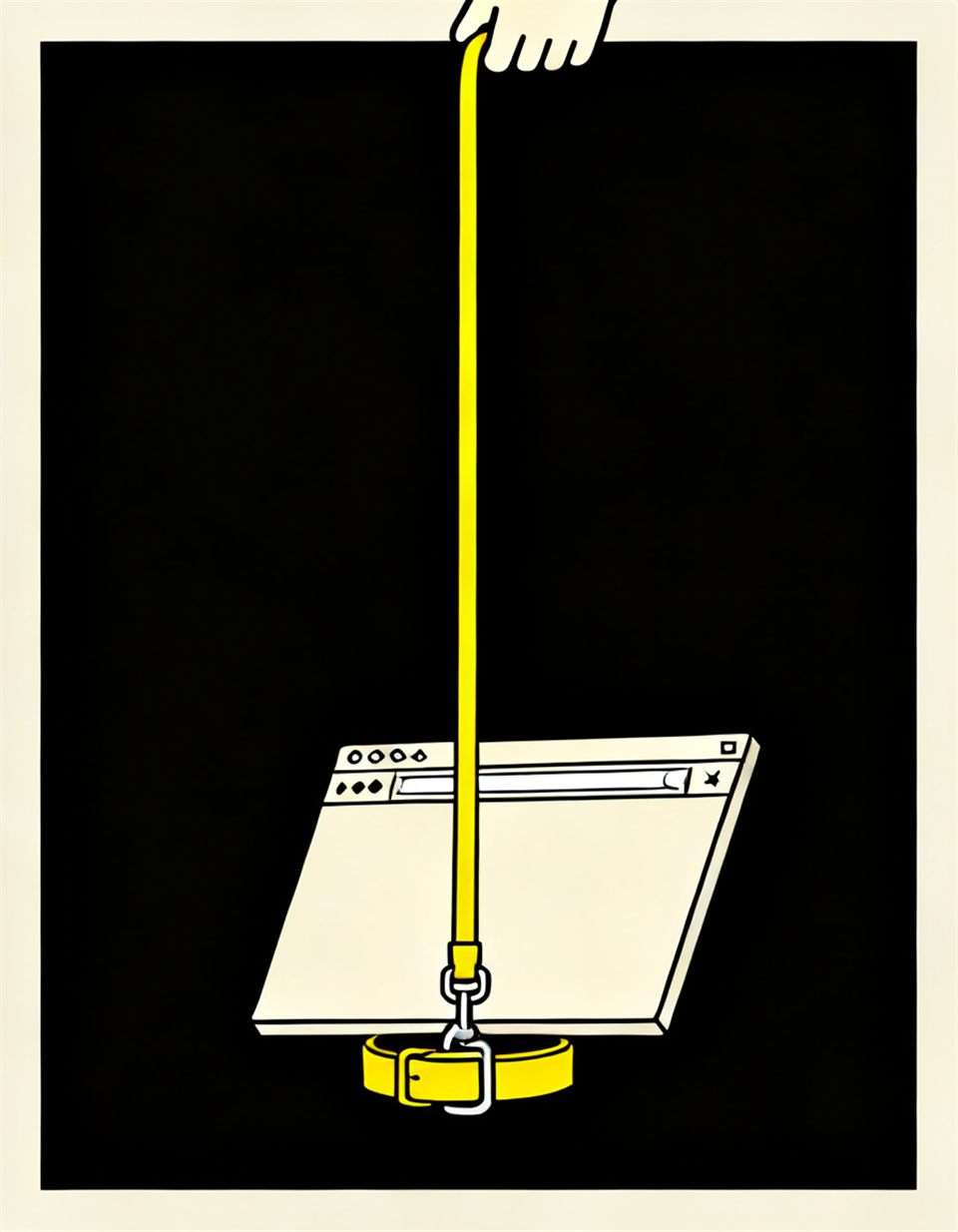

What full ownership actually looks like
Full ownership is boring, in the best way. Nothing depends on staying with the person who built the site.
With a Renozer build, every one of the four layers is yours at launch: the domain registered in your own name, the hosting on your own Cloudflare account with your card, the code and design files handed to you in full, and the content yours as always.
The site is static, so it hosts at C$0 forever, and there's no platform to cancel and no server to rent. Fire us the day after launch and the site keeps running, keeps ranking, and keeps costing nothing.
The ownership checklist
Take this to your current provider, or to anyone quoting you a new site. A provider who owns your outcome will answer all six with a straight yes.
- Is the domain registered in my name, in an account I can log into?
- Is the hosting account in my name, on my own card, that I control?
- Do I get the full site files at launch, not just a login to a builder?
- If I leave, does the live site stay up and keep its rankings?
- Is there any monthly fee the site needs just to stay online?
- Is all of this written down, so ownership isn't a favour I have to ask for later?
If you can't get six clean yeses, you don't fully own your website yet. That's fixable, and it's worth fixing before you invest another dollar in traffic that points at an address you don't hold.
Common questions about owning your website
Does my web designer own my website?
Who owns the domain name?
If I stop paying, do I lose my website?
Can I move my website to another host?
Who owns the content on my website?
What's the difference between owning and hosting a website?
How do I take back a website I don't fully own?
Does Renozer keep any control of the sites it builds?
Find out what you actually own
Pick a time on the calendar. We'll look at your current site together on a screen share, tell you which of the four layers you hold and which you don't, and lay out exactly what it would take to own all four. Fifteen minutes, no sales pitch, no obligation.
On the call you get:
- ✓A plain-language read on who currently owns your domain, hosting, files, and content
- ✓A straight answer on whether your site would survive you leaving your current provider
- ✓Your real five-year cost, worked out on screen next to what you pay now
- ✓A clear path to full ownership, whether that's with us or on your own
- ✓An honest answer, including when the answer is that you're already fine where you are
Pick a time on the calendar. Prefer to write? Email [email protected] and tell us what you need. We reply within 48 hours.
We'll only use your details for the check, nothing else.